Everyone You Love Lives Here
Solo Show; The Flag Art Foundation
May 27 - July 31, 2026
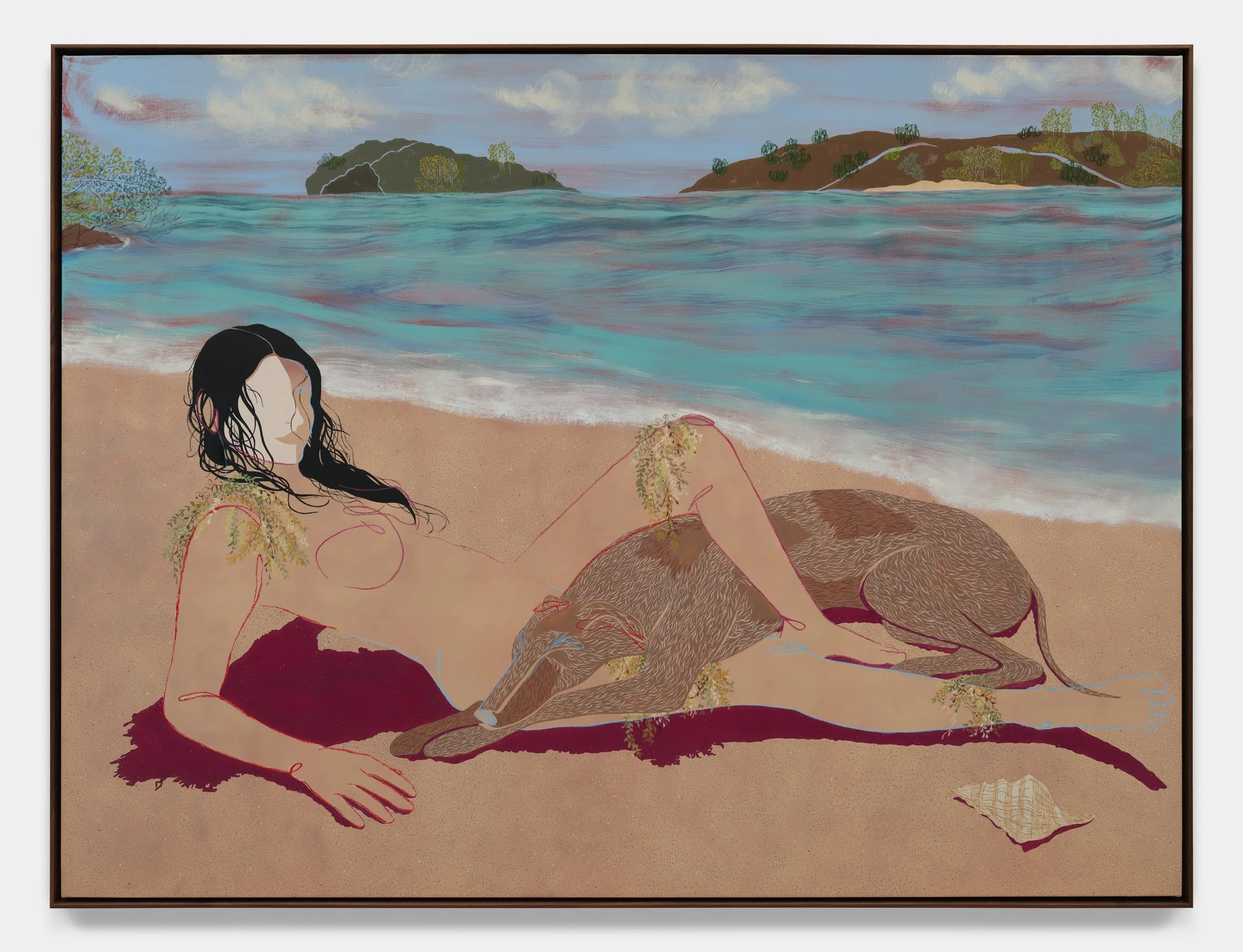
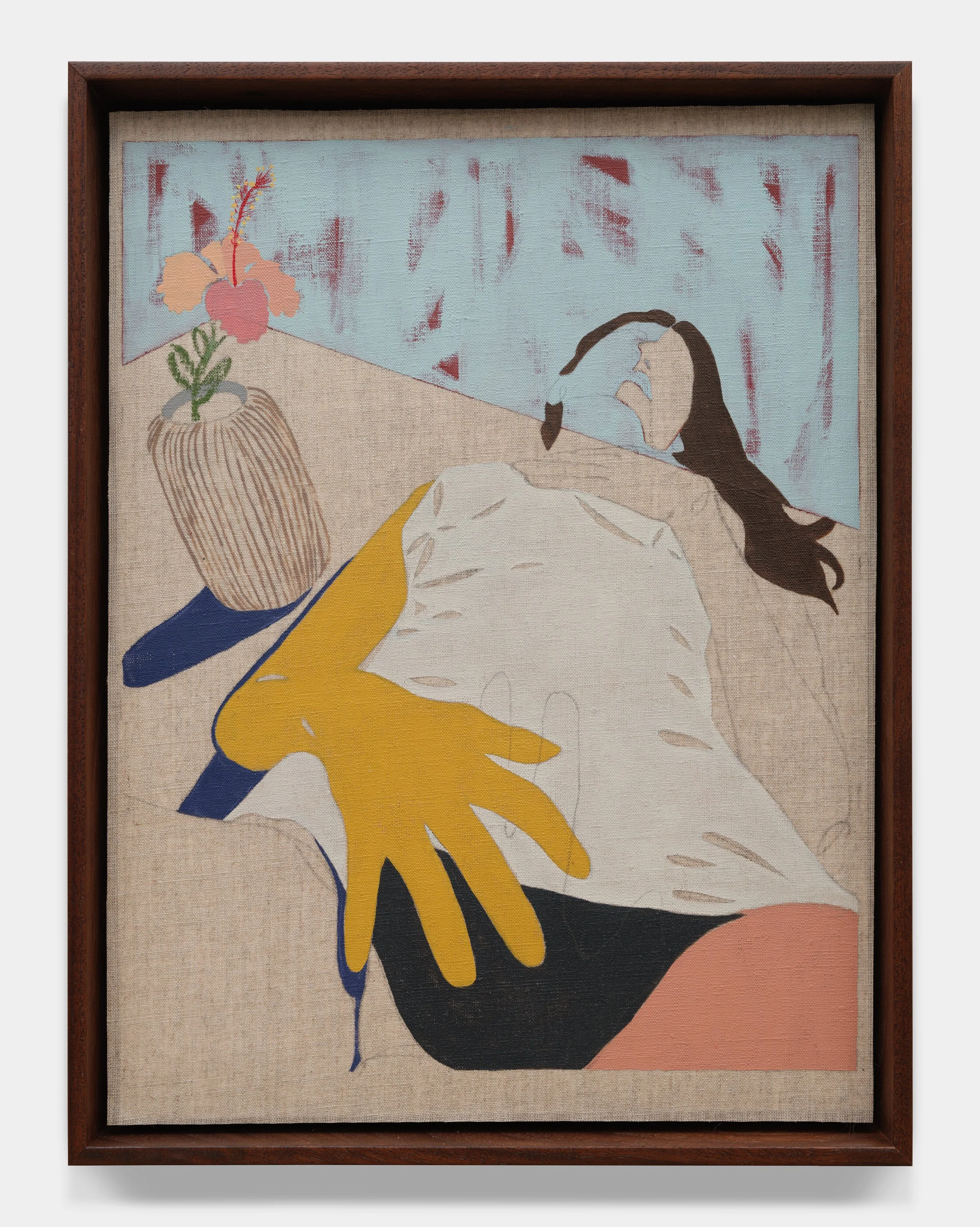

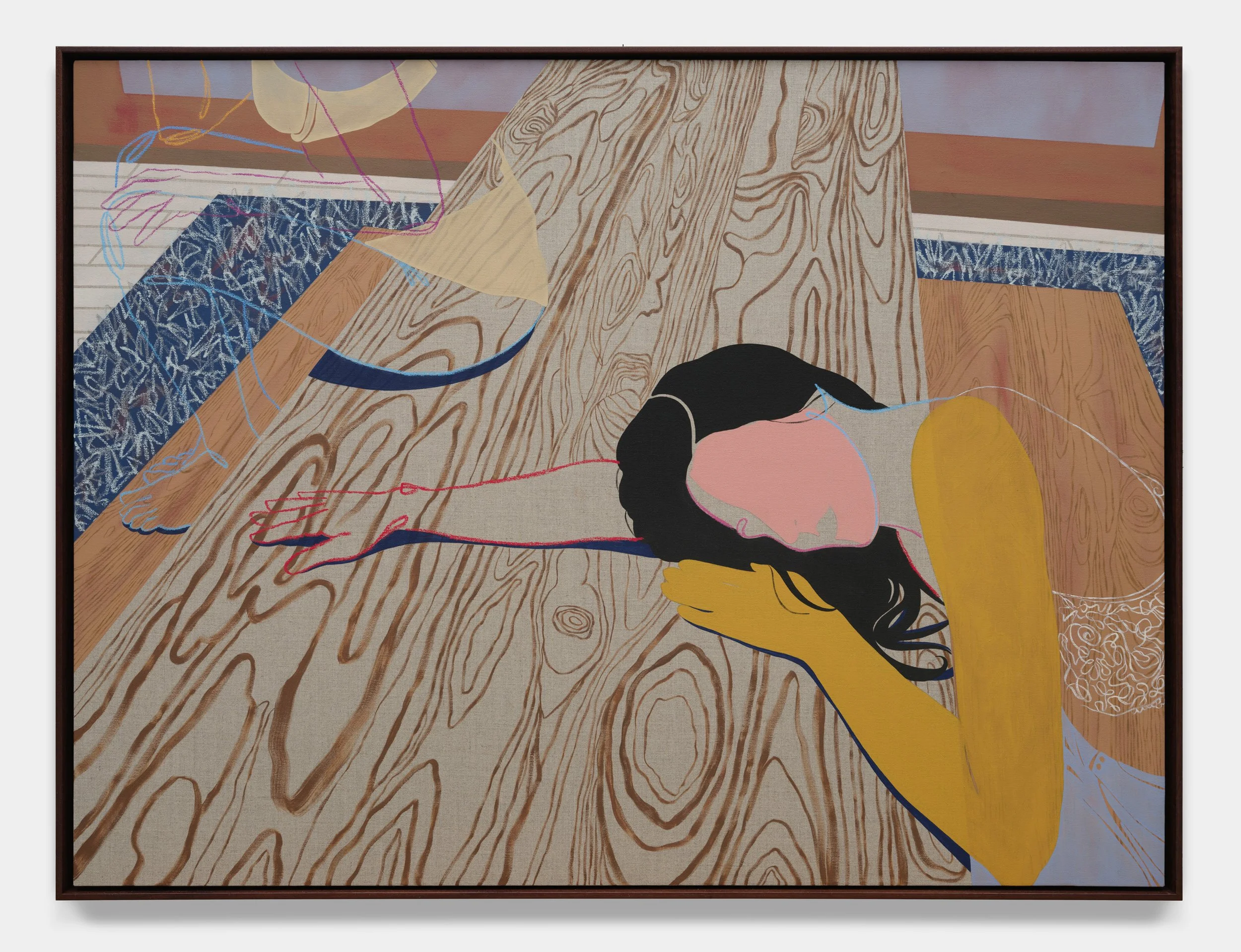
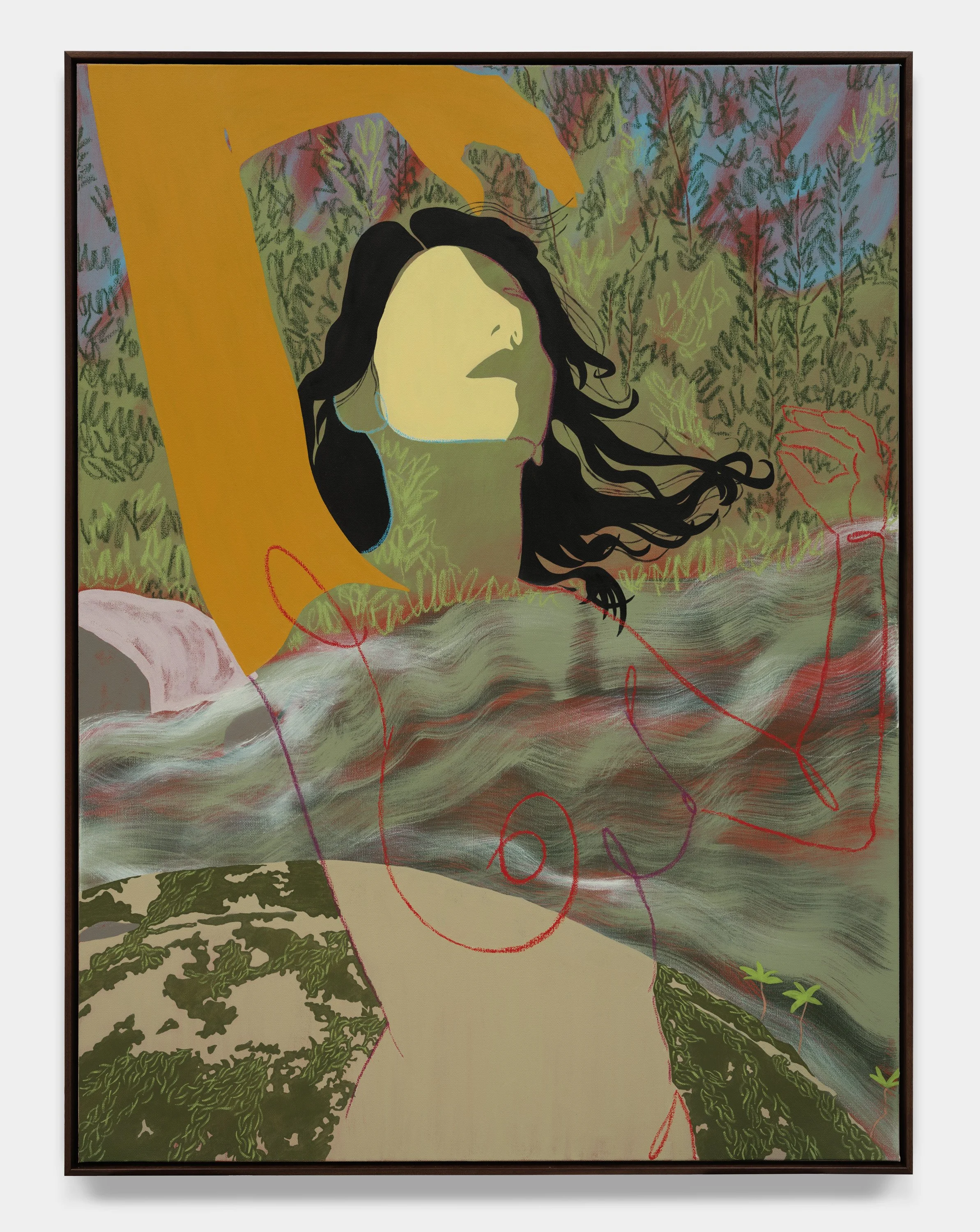
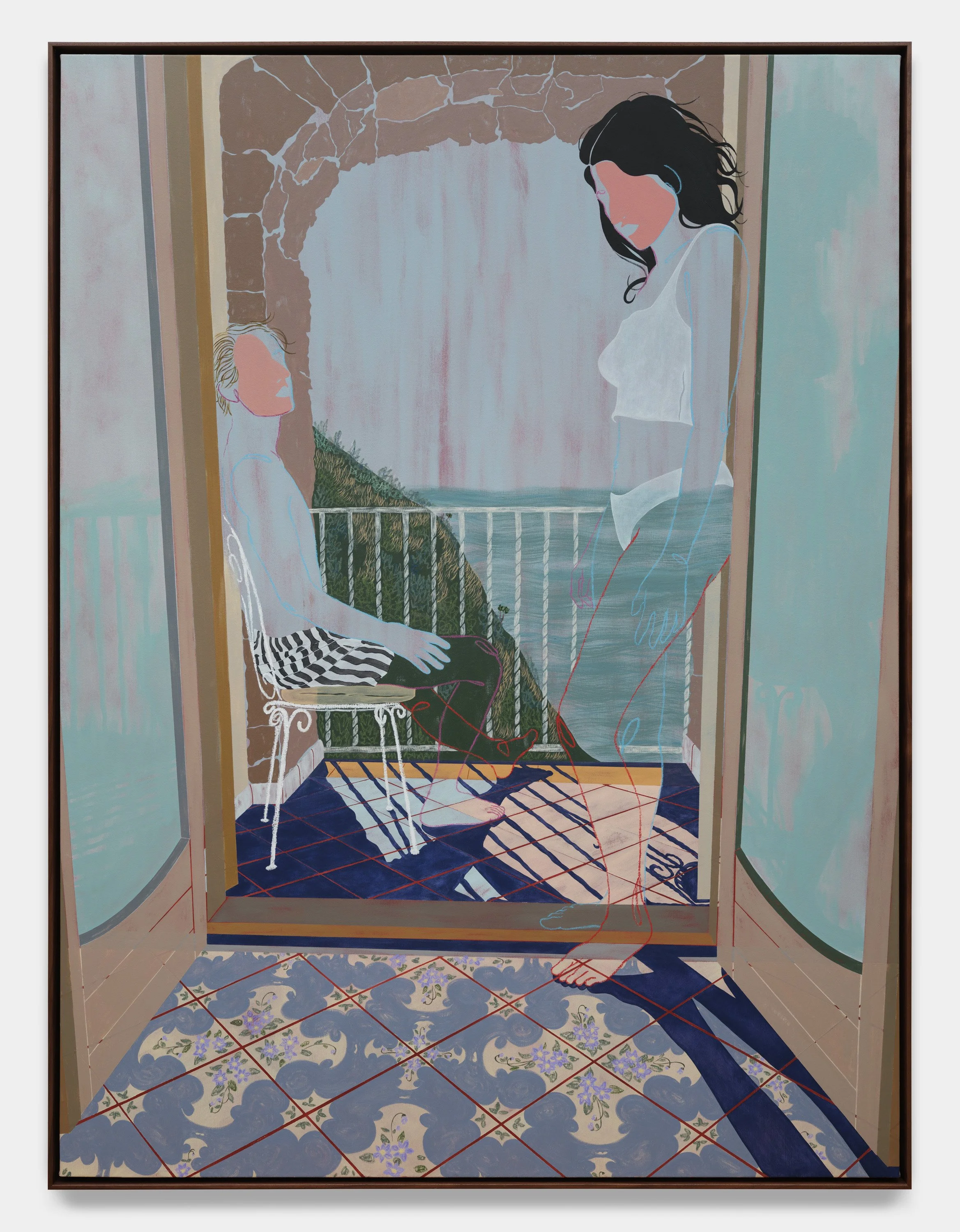
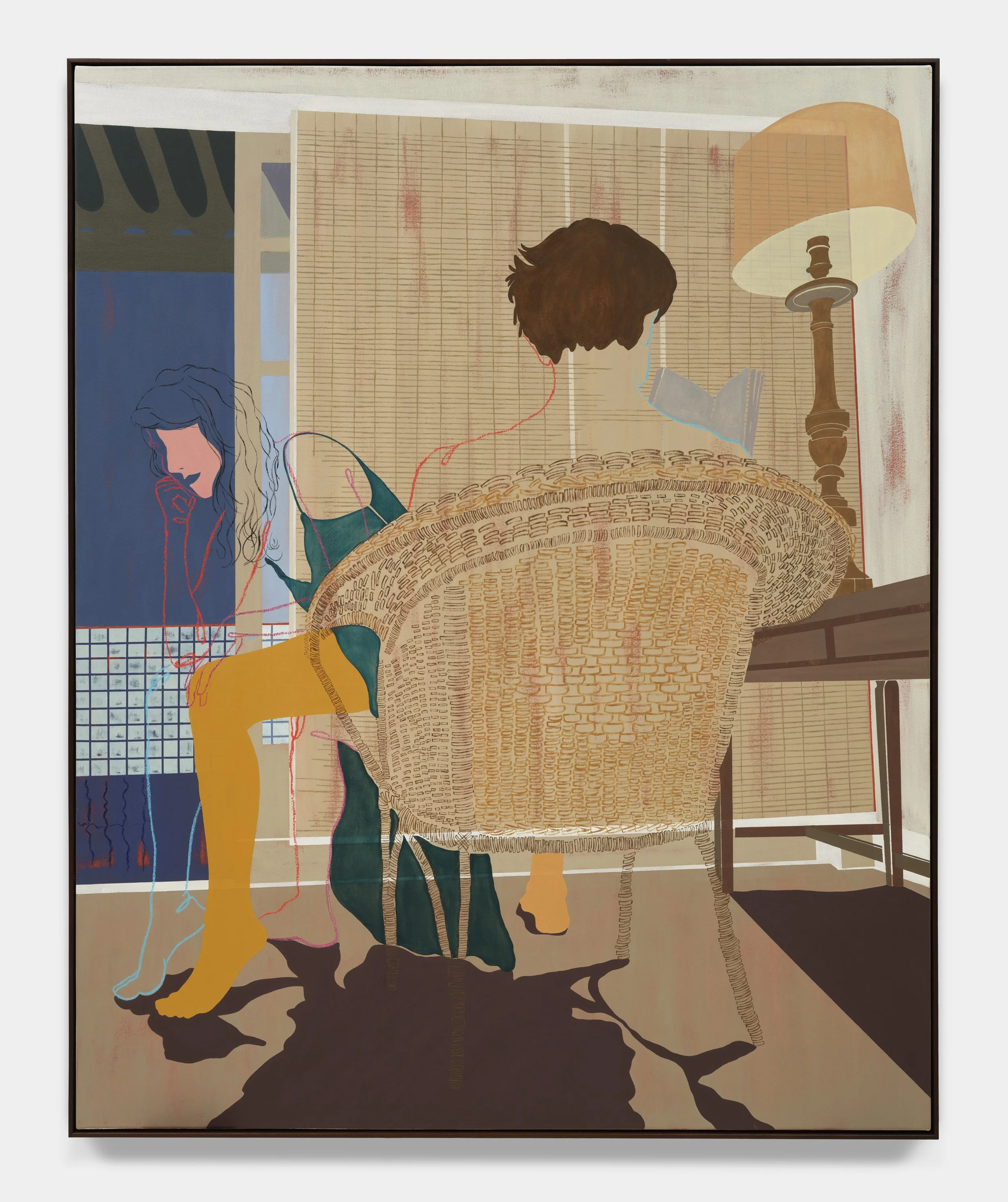
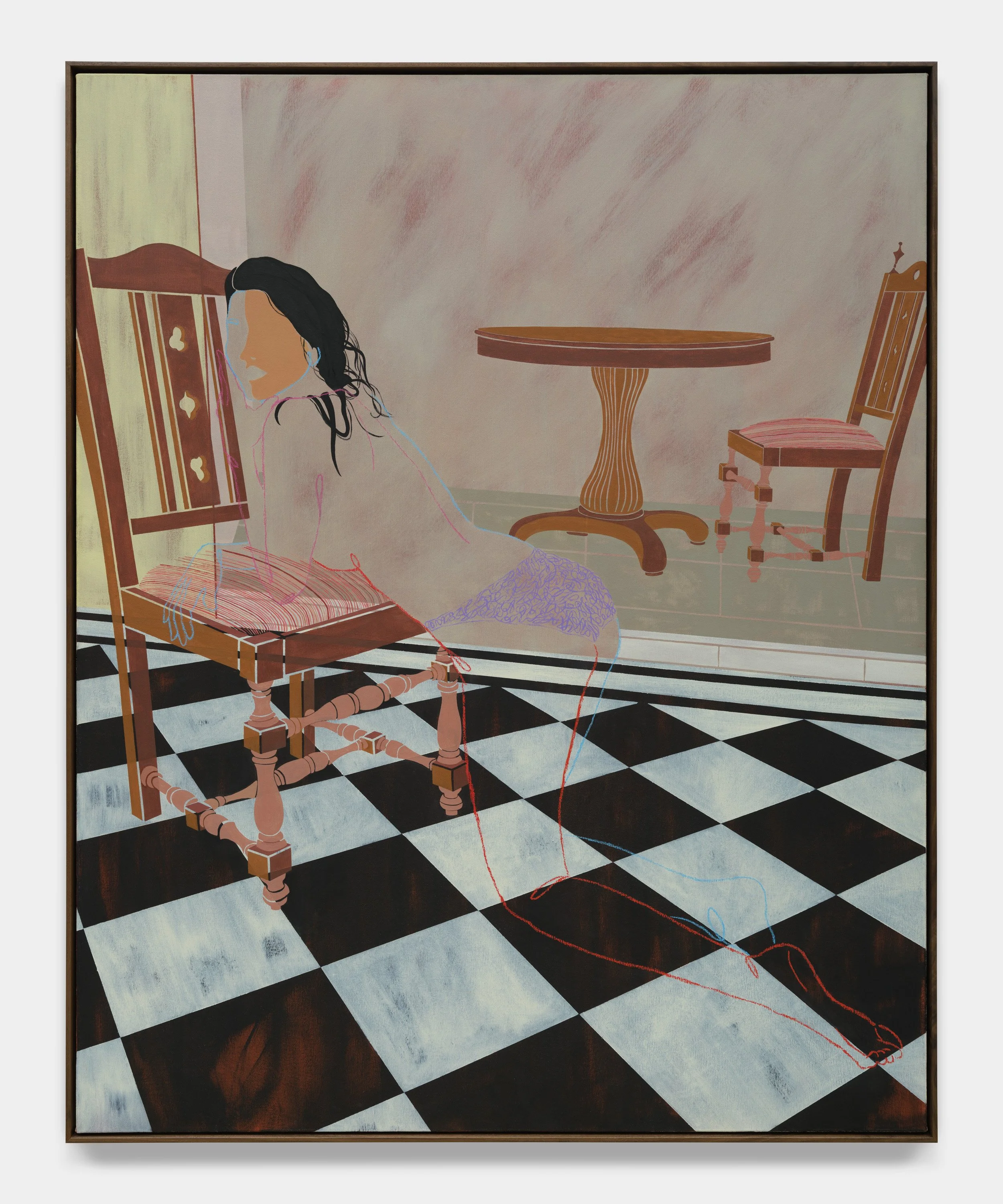
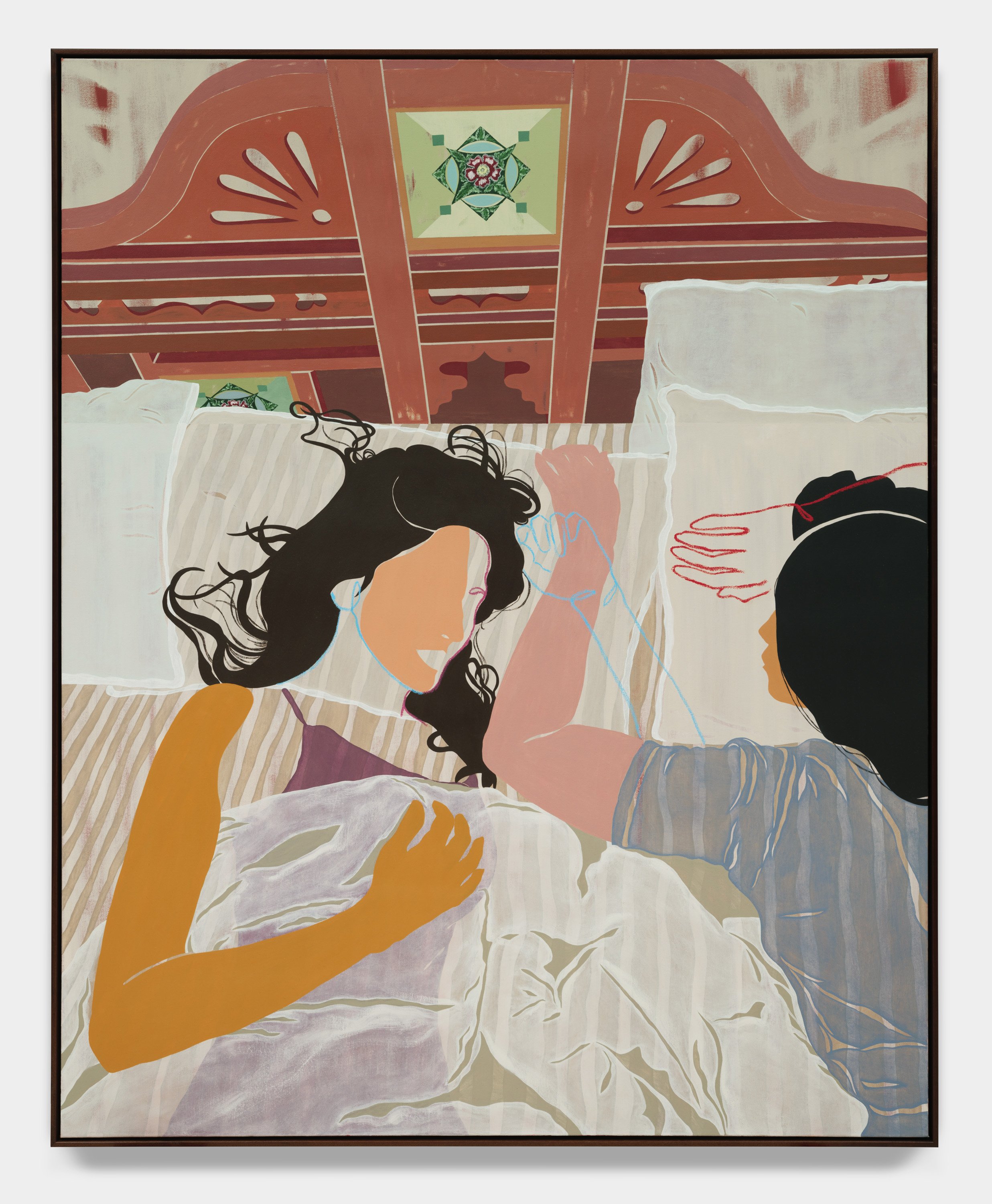
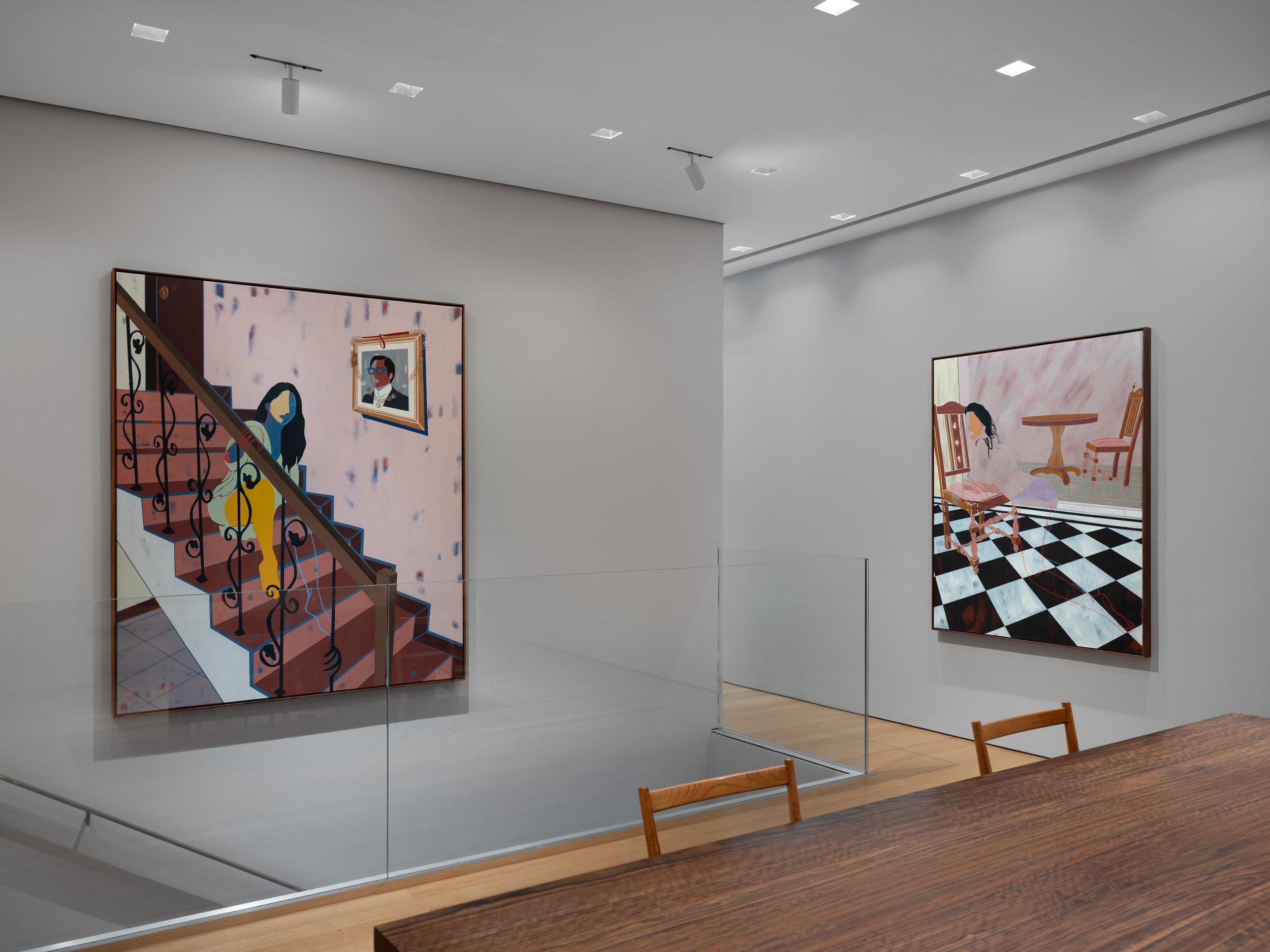
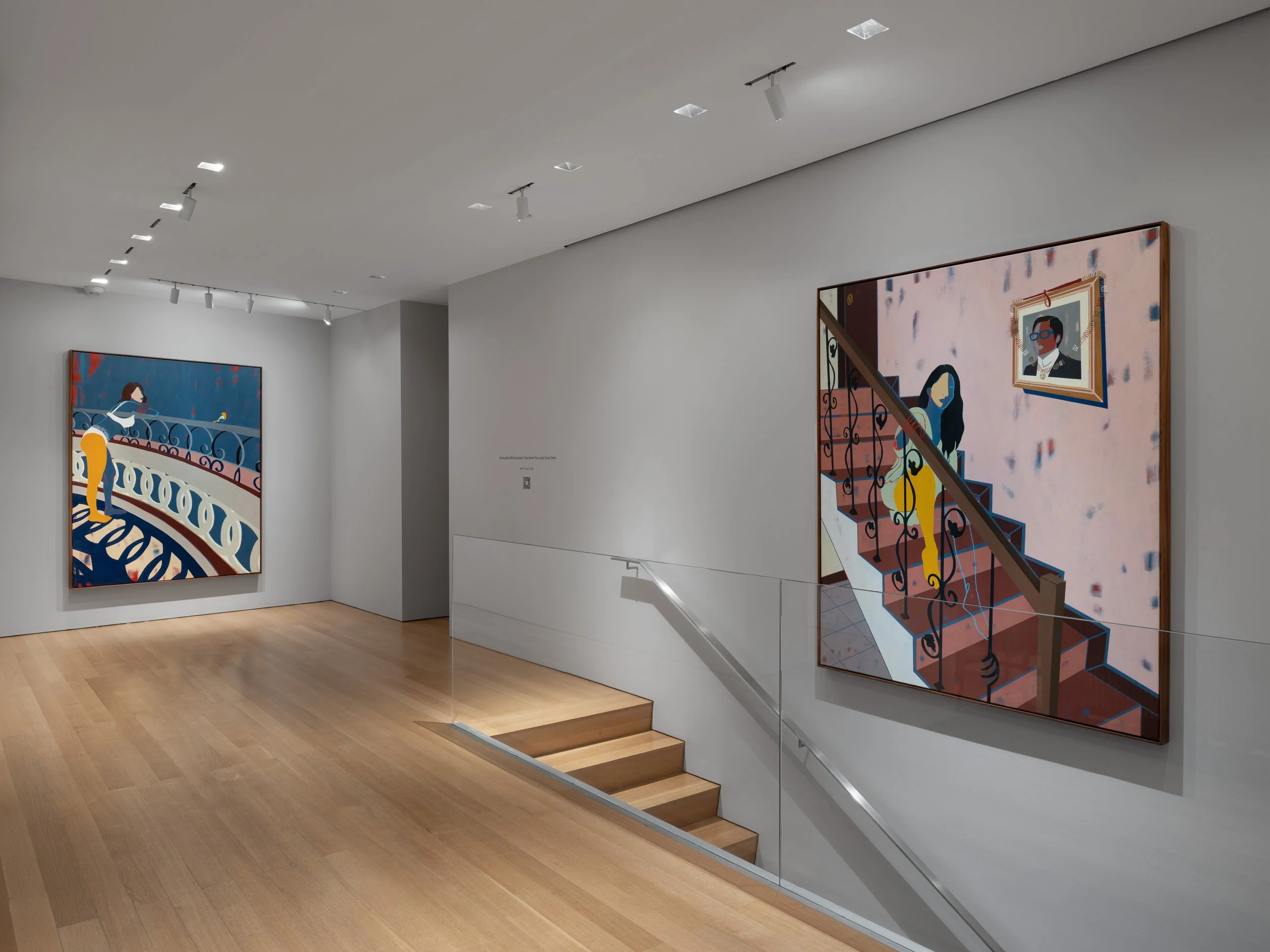
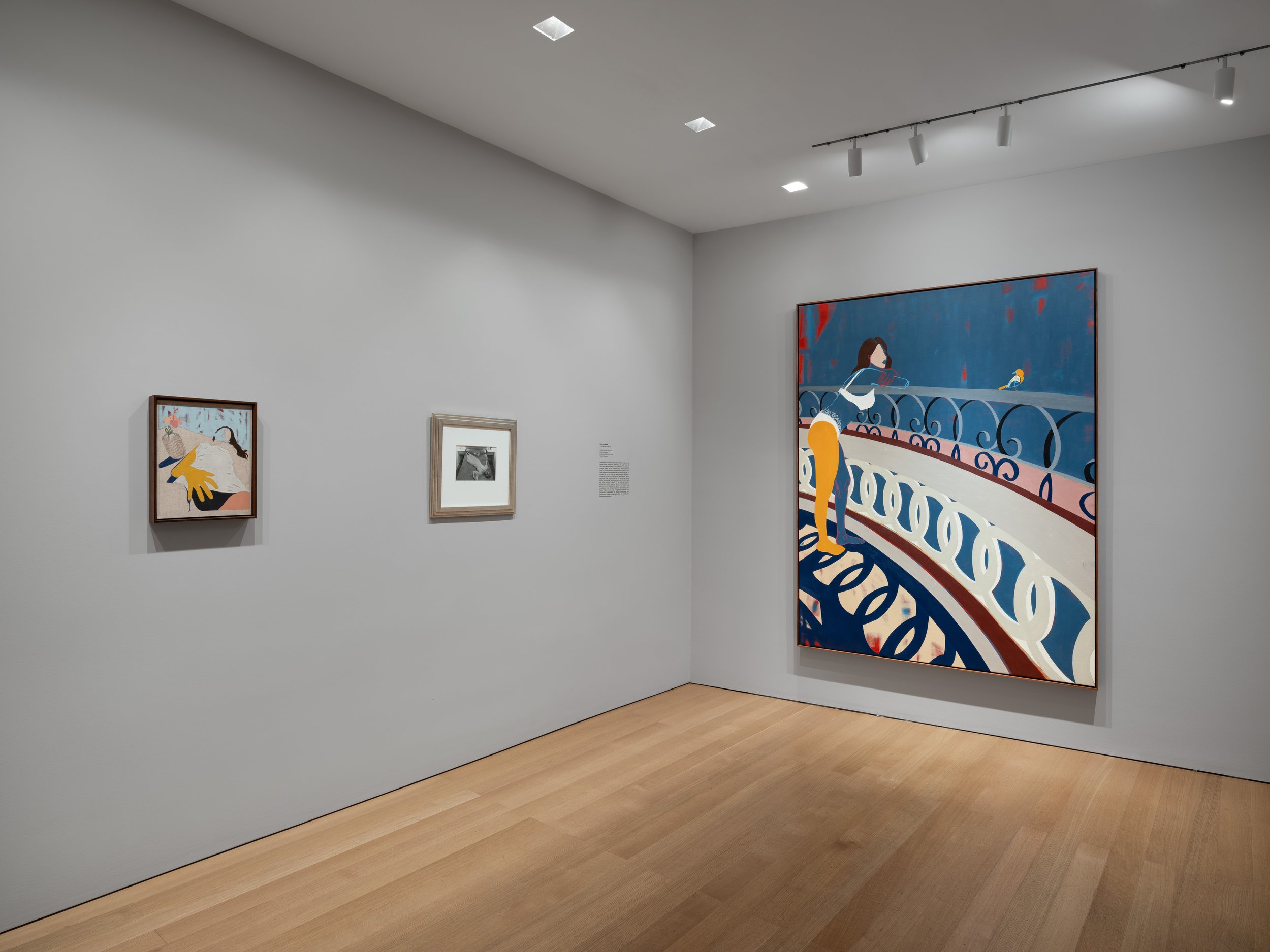
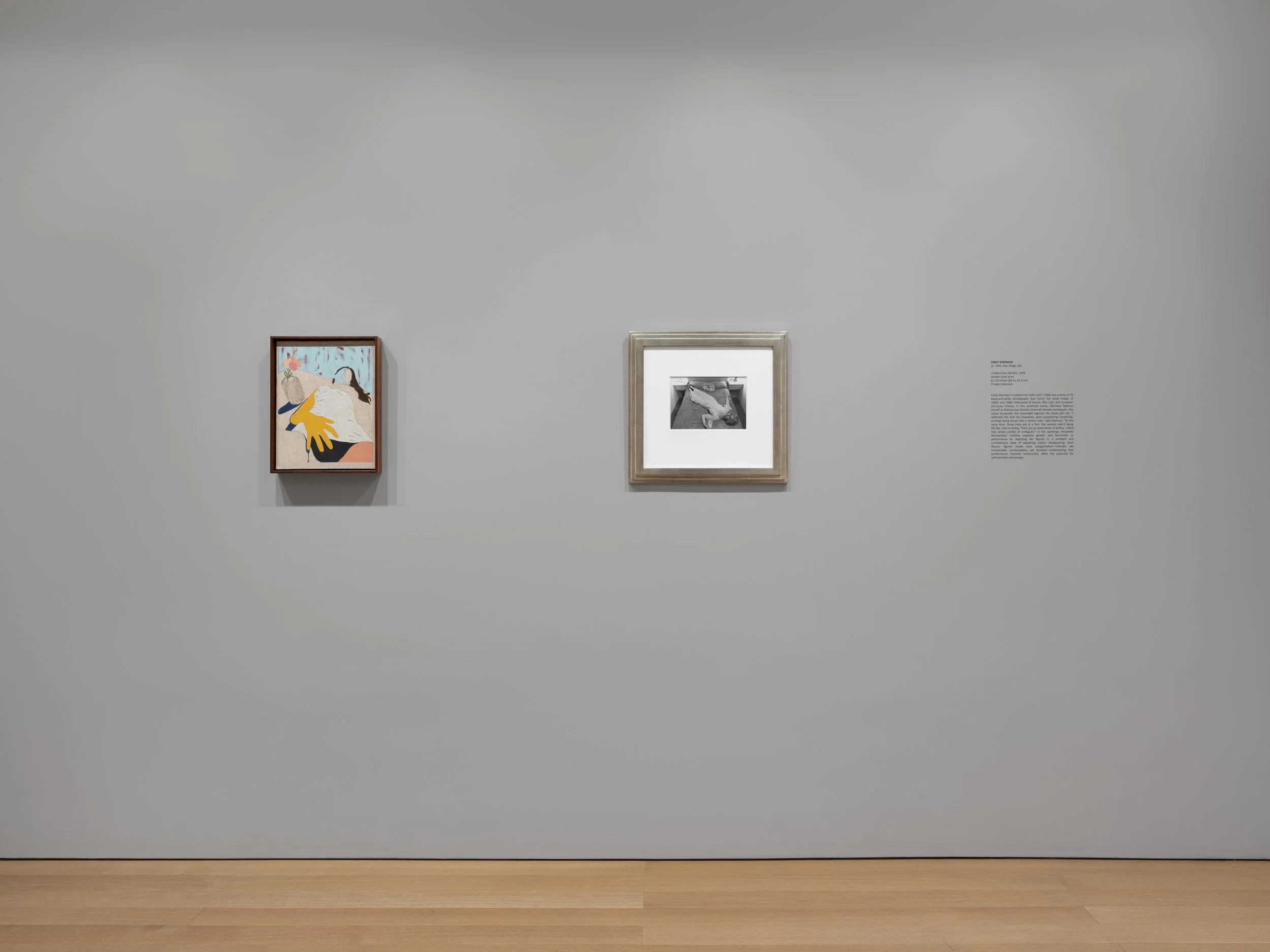
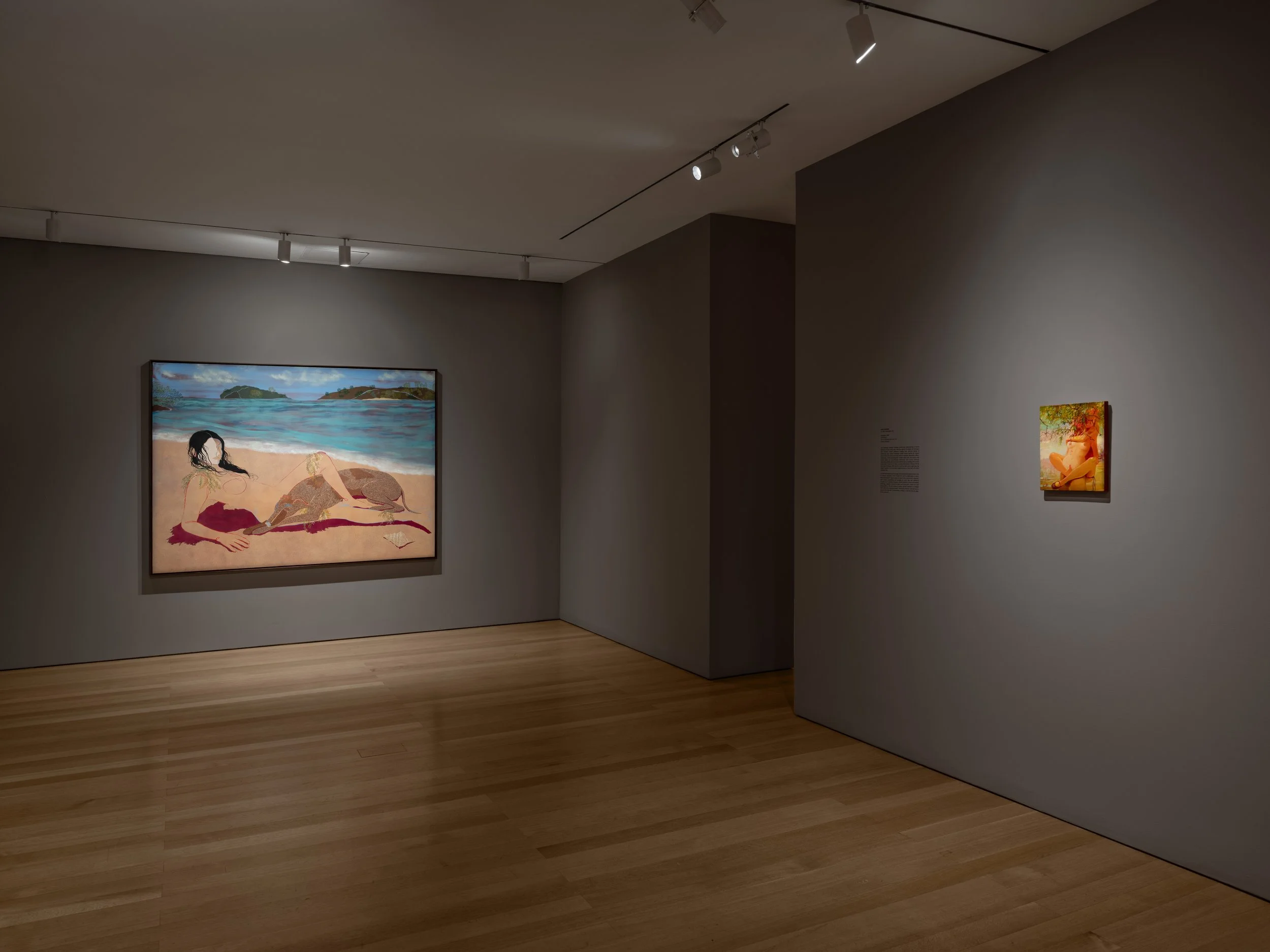
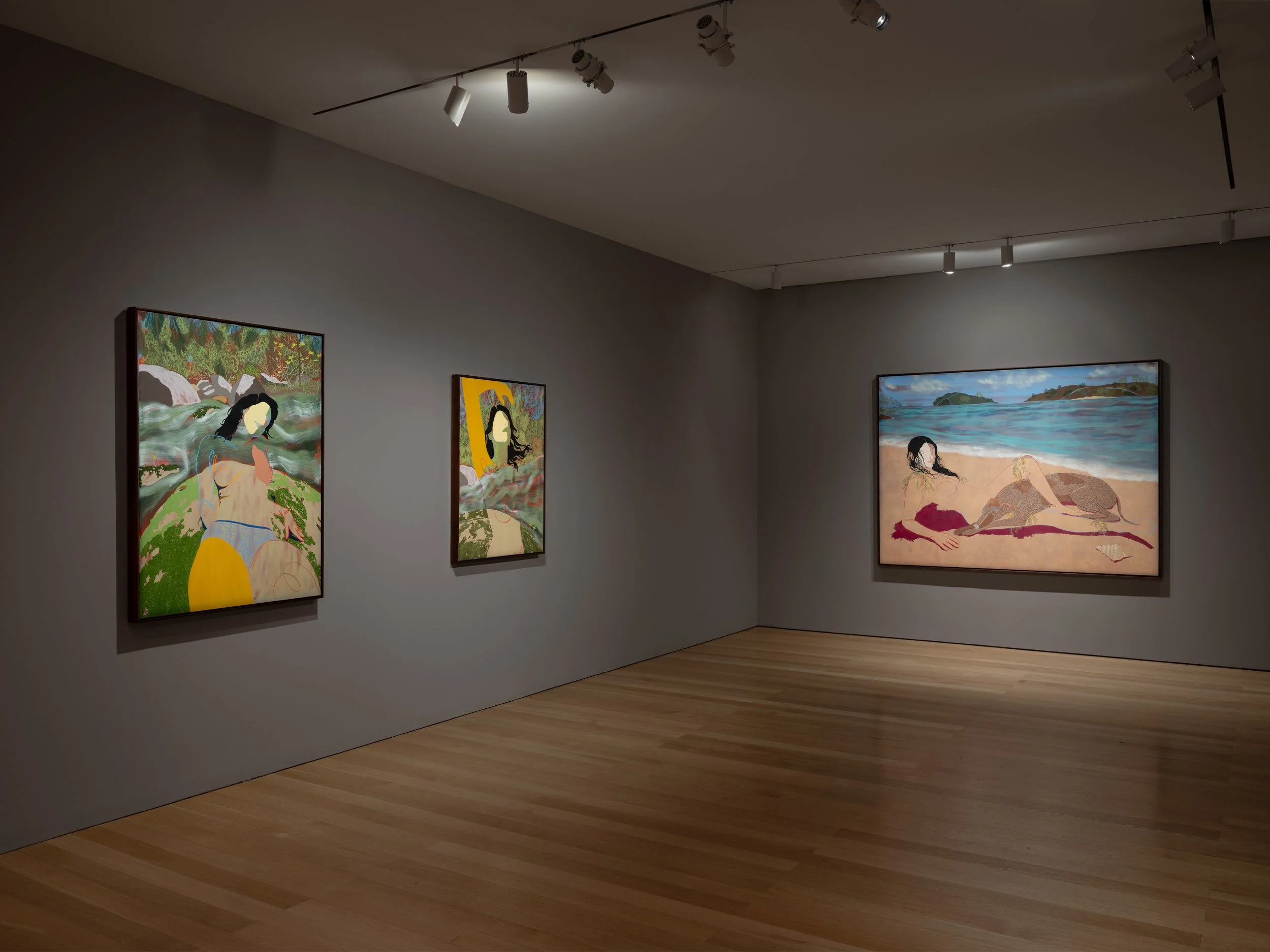
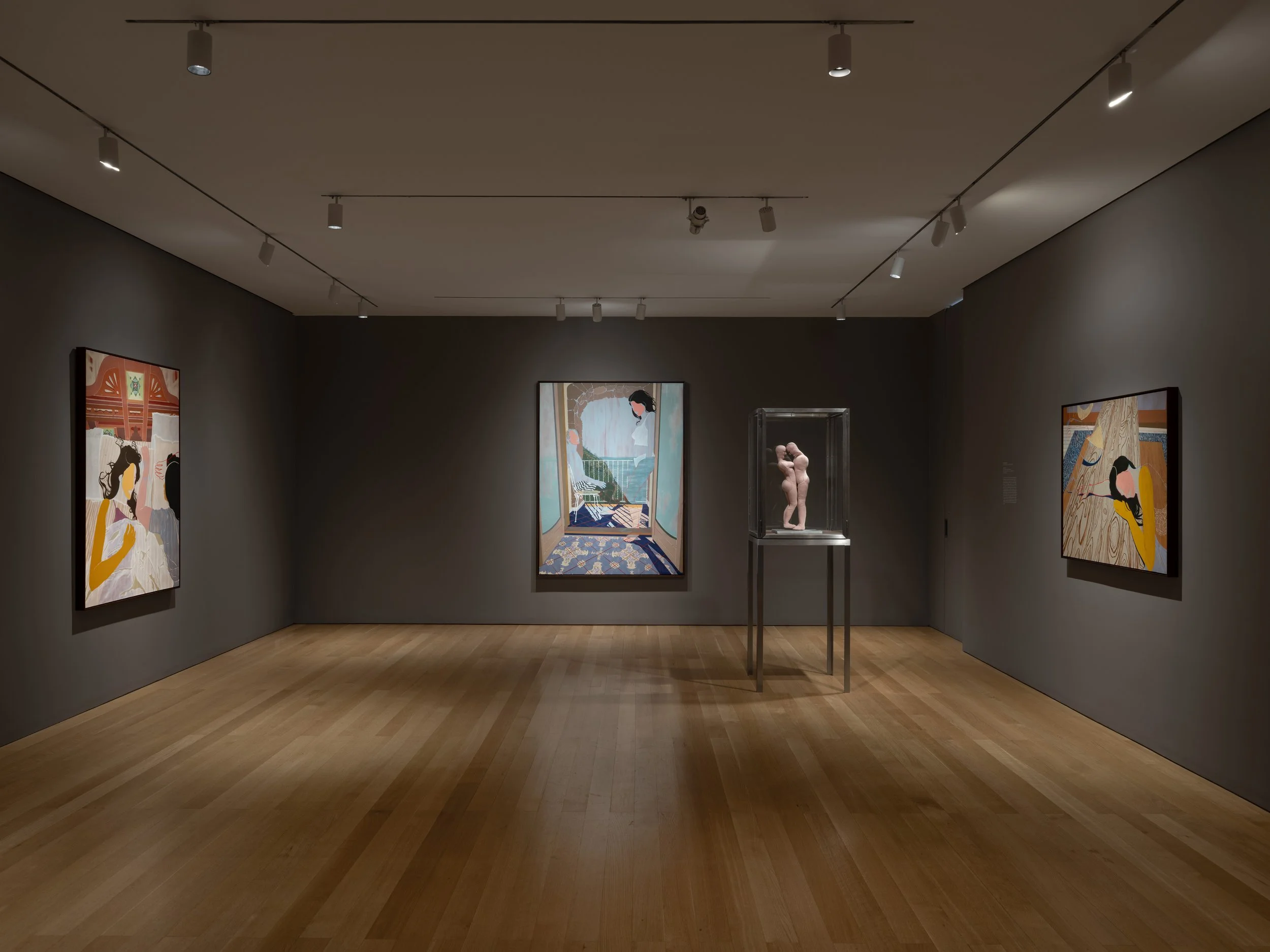
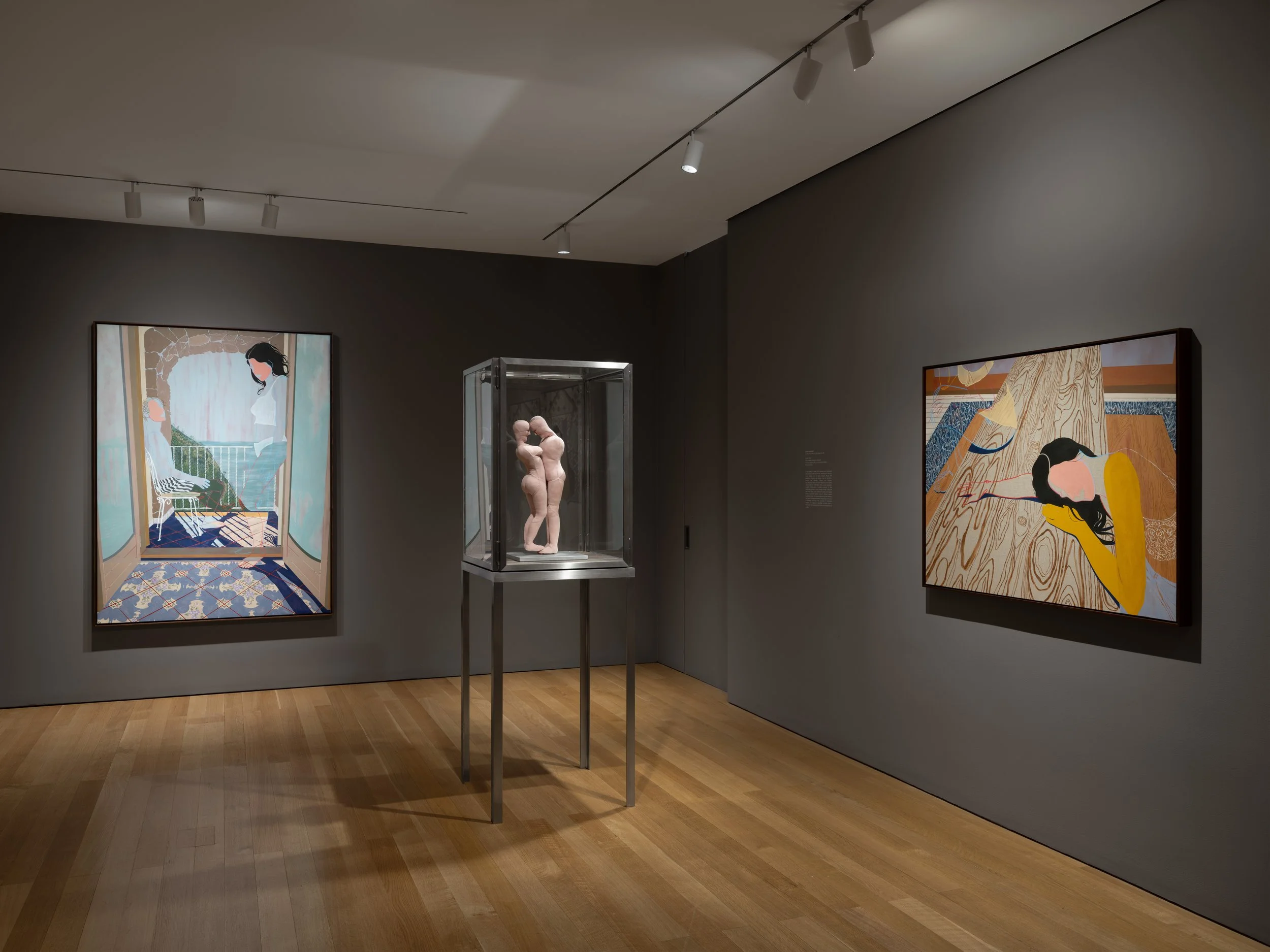
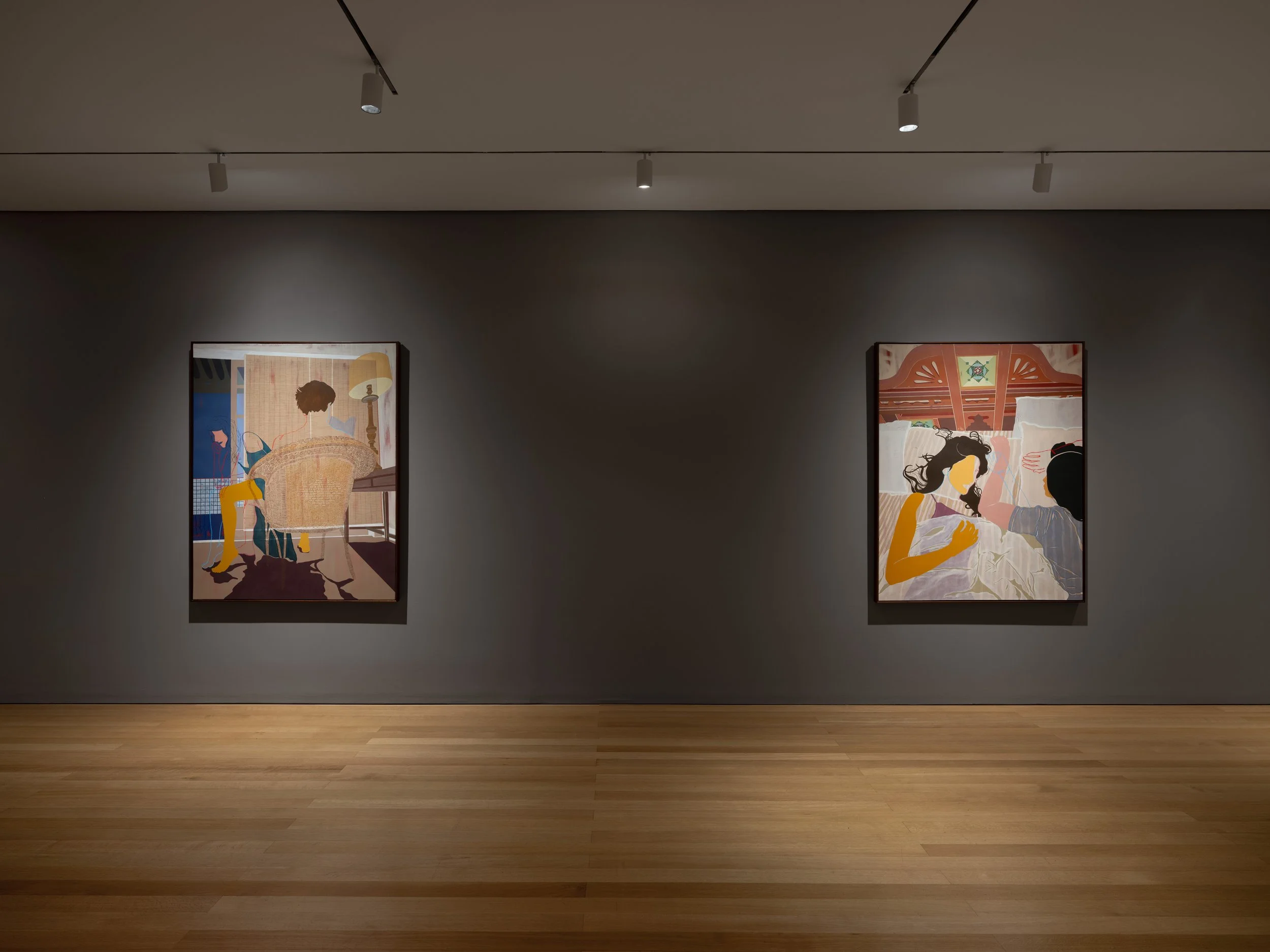
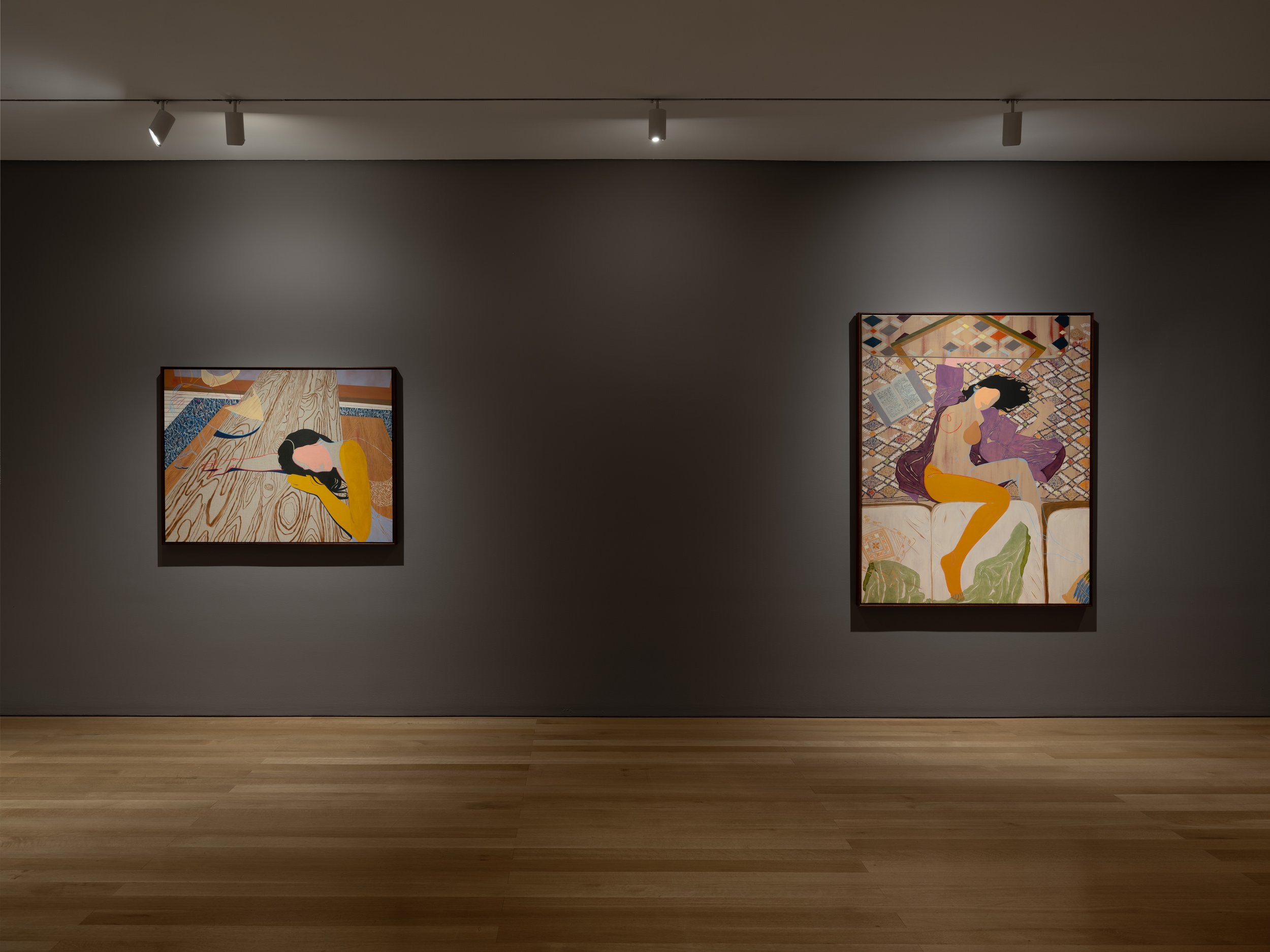
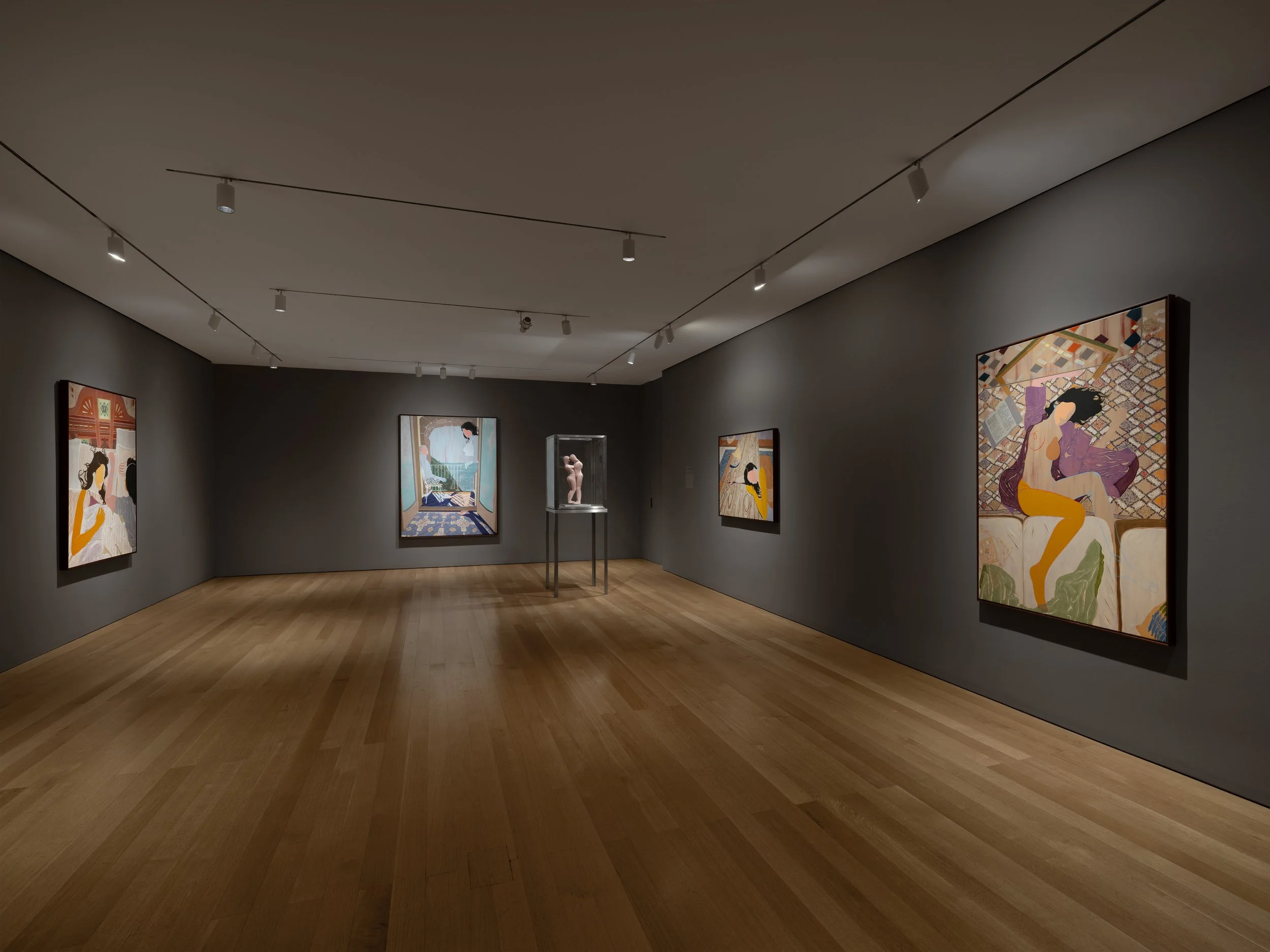
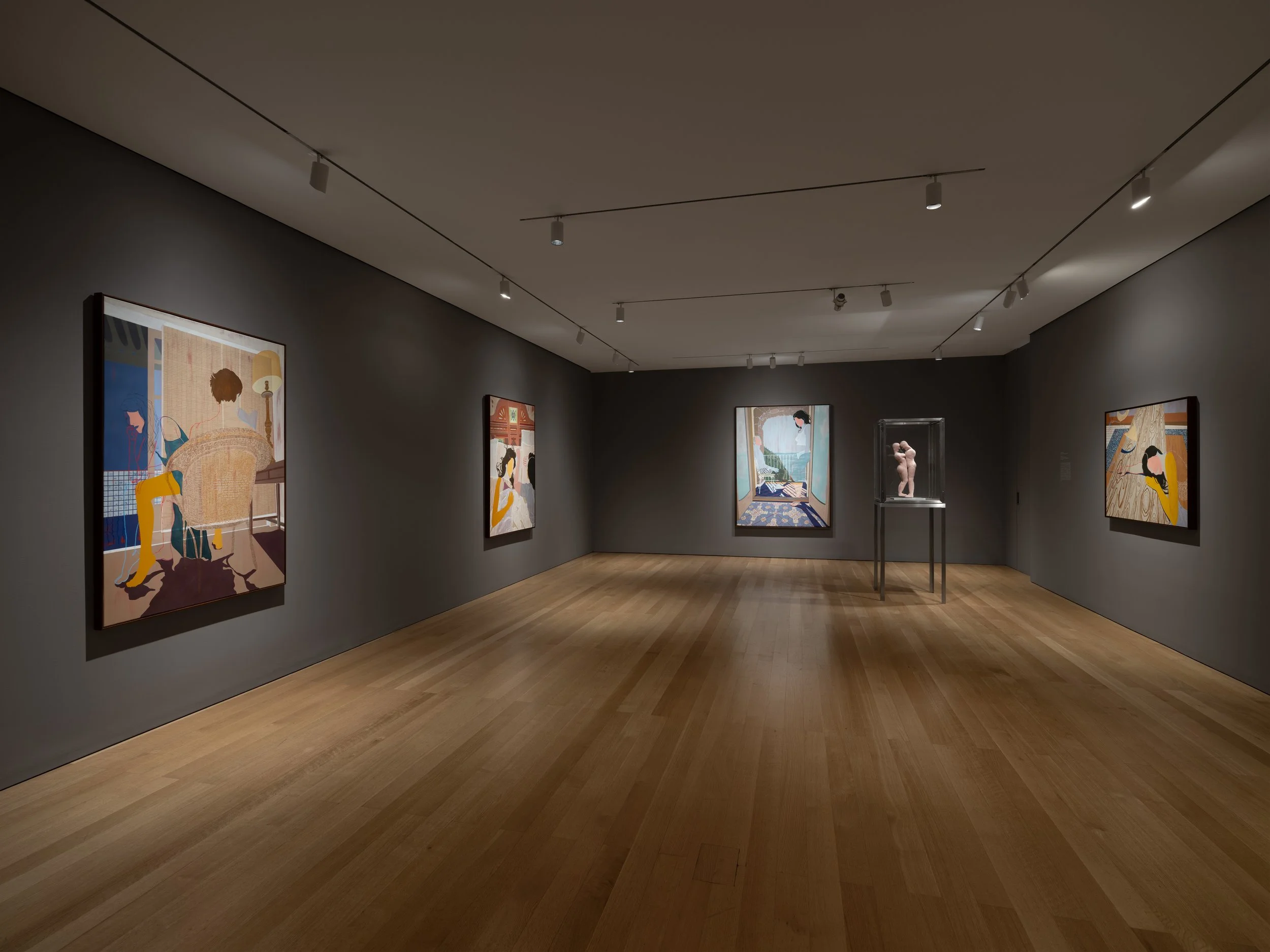
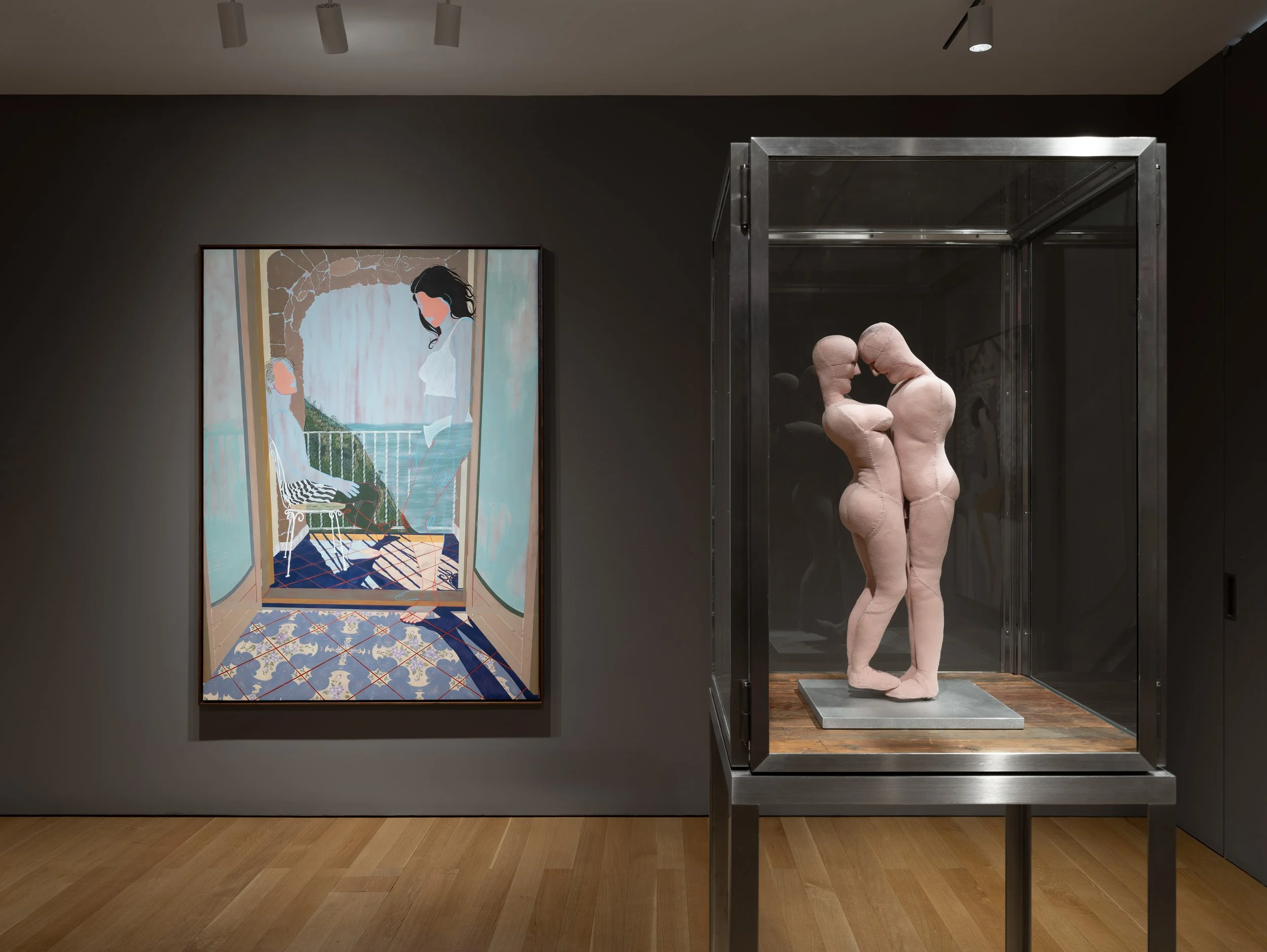
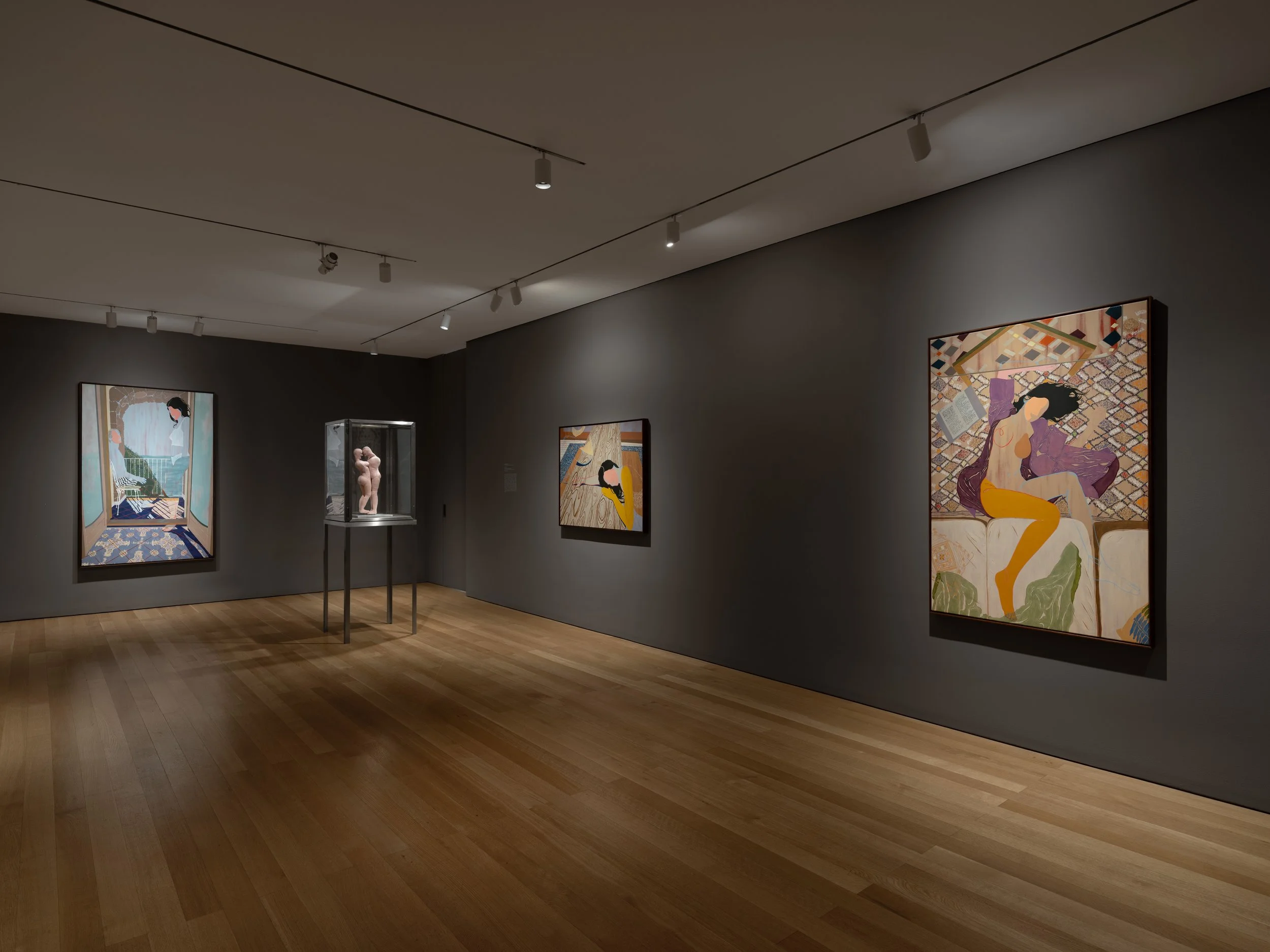
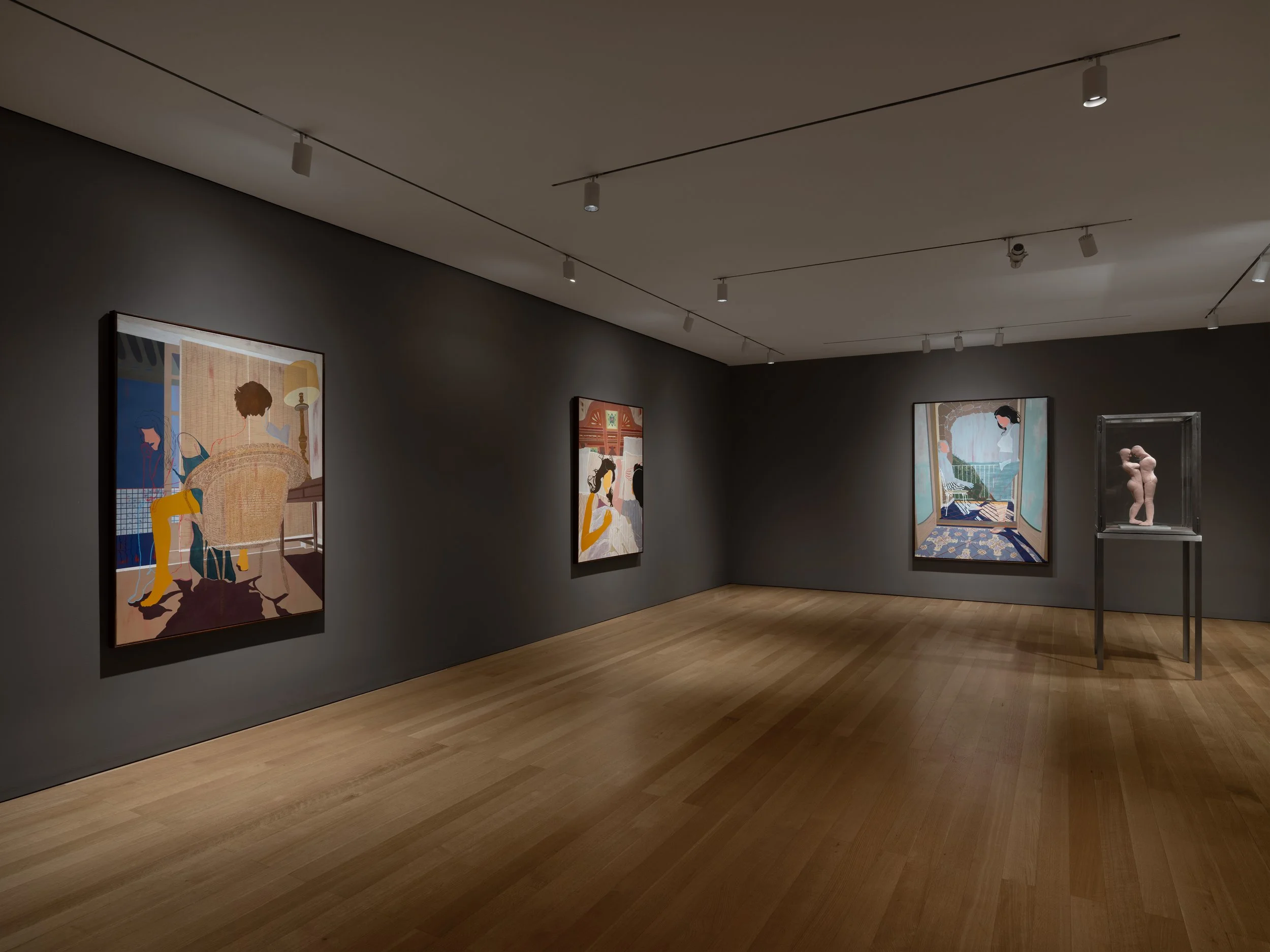
Installation views at The Flag Art Foundation, NYC
Everyone You Love Lives
The FLAG Art Foundation is pleased to announce Everyone You Love Lives Here, an exhibition of new work by Anoushka Mirchandani, on view May 27–July 31, 2026, on the 10th floor. Bringing together new and recent paintings, the exhibition will trace Mirchandani’s development of new and ever-evolving formal strategies for exploring how identity exists in a constant state of flux and formation, of assembly and negotiation. Featuring works from three distinct yet interconnected and on-going series, Everyone You Love Lives Here will situate Mirchandani alongside significant works by Louise Bourgeois, Cindy Sherman and Lisa Yuskavage, revealing that her work is part of a historical conversation around womanhood, memory, nature and ancestry.
In Mirchandani’s paintings, female figures exist in a liminal space between action and contemplation, between transition and becoming. Rendered with a complex interplay of solid color forms and loosely delineated contours of the body, her figures possess a porous relationship to the space around them, whether that be a domestic interior defined by intricate patterning and detail or an expanse of nature wild and abstract. The tension between her figure’s interior worlds and the composite quality of their construction expresses a type of subjectivity she understands through her own diasporic experience of being born and raised in Pune, India, before moving to the United States in early adulthood. Having learned how to balance the memory and influence of her upbringing with the expectations of a new society and culture, Mirchandani brings that same sense of discovery and experiment to her work, where a connection to the past is not only maintained, but continuously renewed through its contact with the present. Deeply biographical, Mirchandani’s work references her matrilineal history, which she accesses through a family archive of images, ephemera and an oral history of stories and memory.
Everyone You Love Lives Here is organized around three groupings of Mirchandani’s work: solitary female figures positioned in transitory spaces, interiors featuring couples and lone figures and selections from her Jungle Paintings series. In the abstract portraits, Mirchandani examines the idea of portraiture itself with female subjects that appear at the threshold separating one space or state of mind from another. Each painting shows a figure at a different state of attention, whether absorbed within or frankly addressing and returning the viewer’s gaze. Paired with one of Cindy Sherman’s Film Still images—a groundbreaking photographic series that examined identity and feminism in the context of mass media—these paintings provide a contemporary reflection on how one’s sense of self changes in response to what surrounds them.
In Mirchandani’s interior scenes featuring both couples and solitary figures, the architecture and objects that define domestic space become repositories of emotional connection and psychological tension. While each figure is constructed with a mix of forms both solid and spacious, the rooms they reside within are rendered with exacting detail and specificity, from a wicker chair to a carpet patterned with colorful diamonds, to the ornamentation embedded in the headboard above a mattress where a couple lay with arms intertwined. Placed in conversation with Louise Bourgeois’ sculpture Couple (2004), which shows two pink fabric figures joined together while suspended within a glass case, Mirchandani’s scenes reveal both intimacy and interiority as elaborate constructions.
With her Jungle Paintings, Mirchandani breaks free from the confines of architectural space, replacing the meticulously detailed interiors with lush green expanses of forest, field and water described with fluid and dynamic brushwork. In contrast to the tremulous dispositions of her interior subjects, these female figures invoke the ‘apsaras’ from South Asian mythology, mystical women born of mist and fog and known for their shape-shifting abilities. Here they coexist, merge and intertwine with landscapes real and imagined to create scenes that evoke a primordial site of belonging. Seen in tandem with Lisa Yuskavage’s painting Mutualism (2006), which depicts the joining of the female body with a fantastical vision of nature, Mirchandani’s Jungle Paintings express both wish and aspiration: they show the female body in a state of reciprocity with nature just as they envision identity being formed in concert with the world rather than in conflict with it.
Anoushka Mirchandani (b. 1988, Pune, India) uses painting as a form of agency—an ongoing process of locating and relocating identity across shifting contexts. After emigrating from India to the United States at 18, she discovered new freedoms while confronting the complexities of belonging and loss. Over the past decade, she has cultivated a visual language that mirrors this interplay of concealment and revelation, expressing the layered nature of selfhood. Her paintings center on figures suspended between repose and action—often women posed with quiet confidence, unbothered by expectations of modesty or restraint. Their bodies dissolve into surrounding forms, delineated only by gestures of oil stick or pastel. The tension between bold poses and vanishing contours evokes questions of visibility and vulnerability: what parts of ourselves do we suppress, and what do we allow to emerge in unfamiliar spaces? Mirchandani’s debut institutional exhibition, My Body Was A River Once, is currently on view at the Institute of Contemporary Art, San José, CA, through August 23, 2026. She has presented solo exhibitions at Yossi Milo, New York, NY (2024); Galerie Isa, Mumbai, India (2023); UTA Artist Space, Los Angeles, CA (2023); Rhodes Contemporary, London, United Kingdom (2021); and Glass Rice Gallery, San Francisco, CA (2020). Her film Landscapes of Longing screened at the Museum of Modern Art, New York, NY, as part of New Directors/New Films (2025). Her work is held in the collections of the Asian Art Museum, San Francisco, CA; the Museum of Art and Photography, Bangalore, India; and Northwestern University, Chicago, IL. She is currently Artist-in-Residence at Silver Art Projects, New York, NY. In August of 2026 Mirchandani will be included in Never The Same River, curated by Dexter Wimberly, at the Ford Foundation, New York, NY.
FLAG would like to acknowledge Anoushka Mirchandani, Nicolas Ochart, Yasser and Marian Mahmud, Suzanne McFayden, Priya Panjabi, the Raham Family, and other private lenders for their generous loans of artworks to this exhibition.
IN CONVERSATION: ANOUSHKA MIRCHANDANI AND GRACE EDQUIST
The FLAG Art Foundation | June 3, 2026
On the occasion of Anoushka Mirchandani: Everyone You Love Lives Here, FLAG hosted a discussion with artist Anoushka Mirchandani and Grace Edquist, moderated by Director Jonathan Rider.
Videography by Michael della Polla.
In Conversation Anoushka Mirchandani x Essence Harden
In Everyone You Love Lives Here, Anoushka Mirchandani’s debut institutional solo exhibition in New York, twelve new and recent paintings unfold across three galleries, each highlighting a distinctive narrative thread within the artist’s practice: domestic interior spaces, mythic landscapes, and psychologically charged scenes of relationships. Further underscoring the themes/lines of inquiry within her paintings—embodiment, desire, and psychic space—the exhibition positions Mirchandani alongside artworks by Louise Bourgeois, Cindy Sherman, and Lisa Yuskavage, which share a conceptual resonance. In this conversation, which took place May 11, 2026, Mirchandani and Harden discuss emotional inheritance, the instability of “home,” and the formal strategies that allow a painting to hold what cannot be fully defined.
The following conversation with Essence Harden, Senior Curator of Yerba Buena Center for the Arts, is included in a forthcoming publication produced on the occasion of Everyone You Love Lives Here.
Essence Harden: You describe The FLAG Art Foundation’s exhibition layout of three rooms as a type of emotional architecture. Would you walk me through your contextual logic of affect and built environment?
Anoushka Mirchandani: Three rooms [which comprise the exhibition] take you deeper and deeper into [my] psychological space. At the top of the stairs is a waiting room, a threshold space that ushers you into my family archive, which I have spent the last few years building by collecting oral histories, archival photographs, and video footage of the women who came before me. My mother is your first stop. How Could I Forget You (2024), depicts my mother sitting on the staircase from my childhood home in Pune, India, watched over by a portrait of her father, my grandfather, whom I never met. It is a painting of her, but also a self-portrait, as I condense a family history and a matrilineage into a singular figure that holds history and the present moment. I see this painting as considering what it means to be on the outside looking in, and on the inside looking out... as identities move fluidly between self and archetype.
EH: So, that first gallery contends with familial/generational intimacy as architecture?
AM: Yes, and it also considers the instability of identity. Cindy Sherman’s Untitled Film Still #11 (1978) is part of this conversation; in it we see that identity is always an active construction and reconstruction. I read it through the lens that the female figure is a site of performance, memory, and becoming all at once.
EH: I want to lead us in a different direction, which is how opacity—as a tool within your practice—confronts and disarticulates these external mappings of identity. Within your work, form and landscape merge into something unfixed and unsettled, reaching toward identity as a process rather than a fixed state. Sensation, rather than certainty, seems to become the emotional condition of the paintings. It’s interesting to use Cindy Sherman as a pairing, as her practice is, in some way, a fumbling through legibility/illegibility of subjectivity and the constructivist element of identity. In that first gallery, opacity allows mythology and the fictive to take form, whether through family, nation, or self. The pairing with Sherman feels especially charged because it creates a sense of performance, almost a cinematic architecture, where identity is staged but never fully resolved.
AM: There seems to be an expectation of how a South Asian immigrant’s identity should be presented and consumed, and I sometimes feel a pressure to perform a “recognizable” version of South Asian immigrant identity; I refuse to perform a stable identity. I also think these expectations extend more broadly to the outside world of green and blue, “Woman,” “Daughter,” and “Mother.” Édouard Glissant’s “right to opacity”1 which represents an inflection in my practice. My Body Was a River Once (2024), which I held back for my own personal collection, was the first painting I made that took me from the man-made, built environment to untamed, raw nature. I affectionately refer to these as my Jungle Paintings; these works were born from a psychological exercise to move beyond some of my generational trappings. In both building and working with my family’s archive, it became clear that we—me, my mother, my broader family—can have very anxious attachments to “home.” Like an insecure attachment to a lover, we sink our teeth into the fear that our home can and will disappear at any moment. My grandparents survived the Partition of India in 1947, they were forcibly displaced from what is now Pakistan to India, to refugee camps and shared houses; it’s no wonder there are lingering feelings of scarcity when it concerns domestic space. The exercise for me then became about what it looks like to find comfort, agency, and safety—the kind you feel in your living room—in the natural world. I wanted to try to find a primordial sense of being and belonging, without four walls, without objects or heirlooms carried down through tens of generations.
EH: Water is such an interesting principle in the work and allows us to arrive at the sensation you’re describing, to be held but not defined...like an ocean as an entity that holds you (with its salt and molecular structures), yet never quite grasped. It’s interesting to then think about that characteristic [of water] showing up in the paintings. Water is an unstable mass that simultaneously holds and refuses to fix the body, which can disappear, reform, and reconfigure itself. And, of course, water is also a migratory space; it moves bodies, histories, and other life forms across the globe. What I’m trying to get at is the idea of being held but not fixed. And depending on where the body is in relation to water, it can hold you, move you, or collapse around you...
EH: If that’s the first room, take us through the second room and the architecture of that space.
AM: We step from the inside world into...
EH: Your paintings then become heirlooms, right? If an heirloom is an object that holds value in relation to legacy, then these paintings are doing that through stories, sentiments, lost memories, and emotional states. You said you held a work back, that feels important. The painting could have entered the market, but it has to stay close [to you] because it carries another kind of value...a familial, emotional, historical value...
AM: Absolutely! Some works are heirlooms in the way you suggest, like How Could I Forget You (2024)—that painting memorializes my grandfather. A portrait of him hangs above the stairs and is adorned with a traditional garland, a sign of love and respect at his passing. This work could never comfortably reside in a home other than ours. Other works are agents of change and those are the hardest to part with. My Body Was a River Once (2024) is one of these. It brought up more questions than answers and taught me something I didn’t already know about myself. It’s inevitable that the paintings, which are so inherently personal, unveil or formalize this language of the diaspora. The bodies I paint are porous, the spaces they inhabit are fragmented, and the layers upon layers of color I meticulously build into them trace my family’s legacy and mirror the diasporic experience.
EH: I feel like, part of what you’re asking of the audience is not to focus too narrowly on what it means for you specifically to be Indian, or Indian-born and working in the United States. Instead, the paintings ask us to experience diaspora through form: through the movement of paint, through opacity, through bodies and spaces that move toward resolution and then dissolve again. Sentiment and sensation become part of how you build the work...and water feels central to that. Because water is such a migratory element—it carries bodies, histories, and movement in ways that are never fully stable—I’m curious about how those formal concerns shape the construction of a painting. When we met in your studio, you mentioned the red ground that sits underneath every painting. I’m also thinking about the oil stick you use as this final layer or final gesture. How do those materials—the ground, the paint, the oil stick, the layering, etc.—help you build an emotional or diasporic condition in the painting itself?
AM: For the underpainting, I always use Mahared, a tried and tested concoction and name of my own making, which, in ritualistic precision, is the first layer of my canvases. Maha, in Hindi, is a prefix that means “supreme” or “the greatest;” for example, Maharaja translates to “the greatest king.” Once the Mahared is laid down, imagery is constructed top-down, working my way backwards by deciding in which layer(s) of the painting the body will live. I reference collage, puzzles, screen-printing, and pattern making by Tetris-ing parts of the painting into one piece. The piece is then “resolved” physically yet remains unresolved in its narrative and emotional quality. I can see the final image in my mind’s eye before a single brush hits the canvas, but as color and form begin to take shape, the painting adjusts and transforms in a dance and/or negotiation with the initial idea.
EH: When I look at your paintings, they feel so organic. The bodies, foregrounds, and backgrounds [in the paintings] don’t always separate through hard edges or fixed lines—everything feels fluid, almost improvisational. But what you’re describing is a very constructed process: you begin with reference photography, which gives you a sense of where the body will live inside the layers of the painting. You start from a relatively fixed, or at least structured position, to then use that structure to make something that feels loose, open, and unresolved. The paintings read as improvisational, but not because they’re unplanned. It’s like a master jazz musician who knows the “rules” and then interrupts and refuses the rhythm and scale. Your paintings exist in that realm for me.
That connects to the gaze [of your figures] too; it’s direct, but not confrontational exactly...maybe it’s confidence, or nonchalance. Your figures often look back, but not in a way that a viewer’s judgment could interrupt their own sense of being. They feel self-possessed, perhaps evasive, invested in something beyond the terms of being judged or fully known.
AM: Their gaze is intentional; there is agency and acknowledgment in that gaze. It says, “I know you are watching me, but I am watching you too.” I don’t intend for the gaze to be confrontational, because confrontation still grants the viewer a certain kind of power. These figures are occupied by something unknowable beyond the frame, they’re never fully present...
EH: The work does that, especially when you move from domestic space, a space of safety, into the wild, or into the world outside the constructed environment of the home. Some of your interiors don’t even feel totally enclosed; the figures are depicted inside, but they don’t feel contained by the four walls around them. If they were hard-lined or more fully rendered, they wouldn’t feel as elusive, they would become too fixed. But because they’re painted with a looseness, they stay unfixed in both the image and the mind. Maybe that’s where the spiritual quality comes in?
AM: I’m thrilled the works lead you into a spiritual realm. There are moments that transcend the physical plane for me; I want the water to feel like unfurling smoke from an incense stick, floating strands of hair, or wispy remnants of fog.... I want there to be a sense of lingering, which carries you beyond the captured moment of the “finished” painting. It’s why I’m so drawn to the act of drawing with the oil stick and oil pastel; each drawn line injects more life and instability into the work. It’s the most thrilling part of painting to me!
EH: That’s important: a formal quality becoming a sensation... and then a sentiment. A viewer may not know about your family archive or the histories underneath the work—these things can remain coded or private, an “if you know, you know” kind of recognition—but you can still feel the charge of the work. Because you start from such a specific place—the archive, the photograph, the plan in your mind’s eye, the layers, the linework, etc.—a viewer enters your paintings through sensation rather than explanation. You’re not making work that is fully knowable, but you are making work that is deeply felt.
When your paintings are hung in dialogue with Bourgeois, Sherman, and Yuskavage—other art histories—they refuse to be reduced to identity as a category, but they also don’t abandon identity. The pairings [in this exhibition] ask viewers to consider another way of knowing: not through certainty, but through feeling, opacity, and by being in relation.
AM: That’s beautifully said, Essence. Heritage and family history are intrinsic to my practice, but that doesn’t mean the work can or should be resolved in a single takeaway. I hope that viewers are invited to feel their way through the work, and the final room of the exhibition reinforces that. It is an emotionally charged gallery that asks you to inhabit spaces that have become repositories for memory. Here, you will find love, longing, companionship, and tension, among a myriad of other emotions. Everything in this room is understood in relation to the bodies and their surroundings. The wicker chair3, the balcony4, the table5, the rug6, all become actors in the story with their inner dialogues simultaneously reflecting the inner lives of the figures they accompany.
Louise Bourgeois’s sculpture Couple (2004) creates a psychological charge in this space. Their soft fleshy bodies, contained in a stainless steel and glass cage, emit a certain sound frequency, which makes me reconsider the exact point of connection in my paintings where bodies intertwine and linework meets linework.
I find myself coming back to Between My Hip Bone and Rib Cage (2026), a painting inspired by a recent trip to the Caribbean island of Saint Vincent, where I was surprised by how its colonial history presented itself in the environment. Architectural remnants juxtaposed with lush tropical jungle—leaves bigger than my body. This experience was so visually different from how I saw the colonial history of the British Raj growing up in India. In the painting, a woman’s body entangled with the English gun dog, and both are embedded in the sand. It’s hard to determine, even after painting them, who is caring for whom? Seeing this work alongside Lisa Yuskavage’s Mutualism (2006) feels especially meaningful. It’s [the Yuskavage] parasitic yet playful. Both paintings explore the complicated nature of intimacy.
EH: It’s amazing how porous it all is